AI for Stormwater and Hydrology
AI Performance on Stormwater Permit Calculation Packages
AI speeds stormwater drafting and sizing, but engineers still own review.
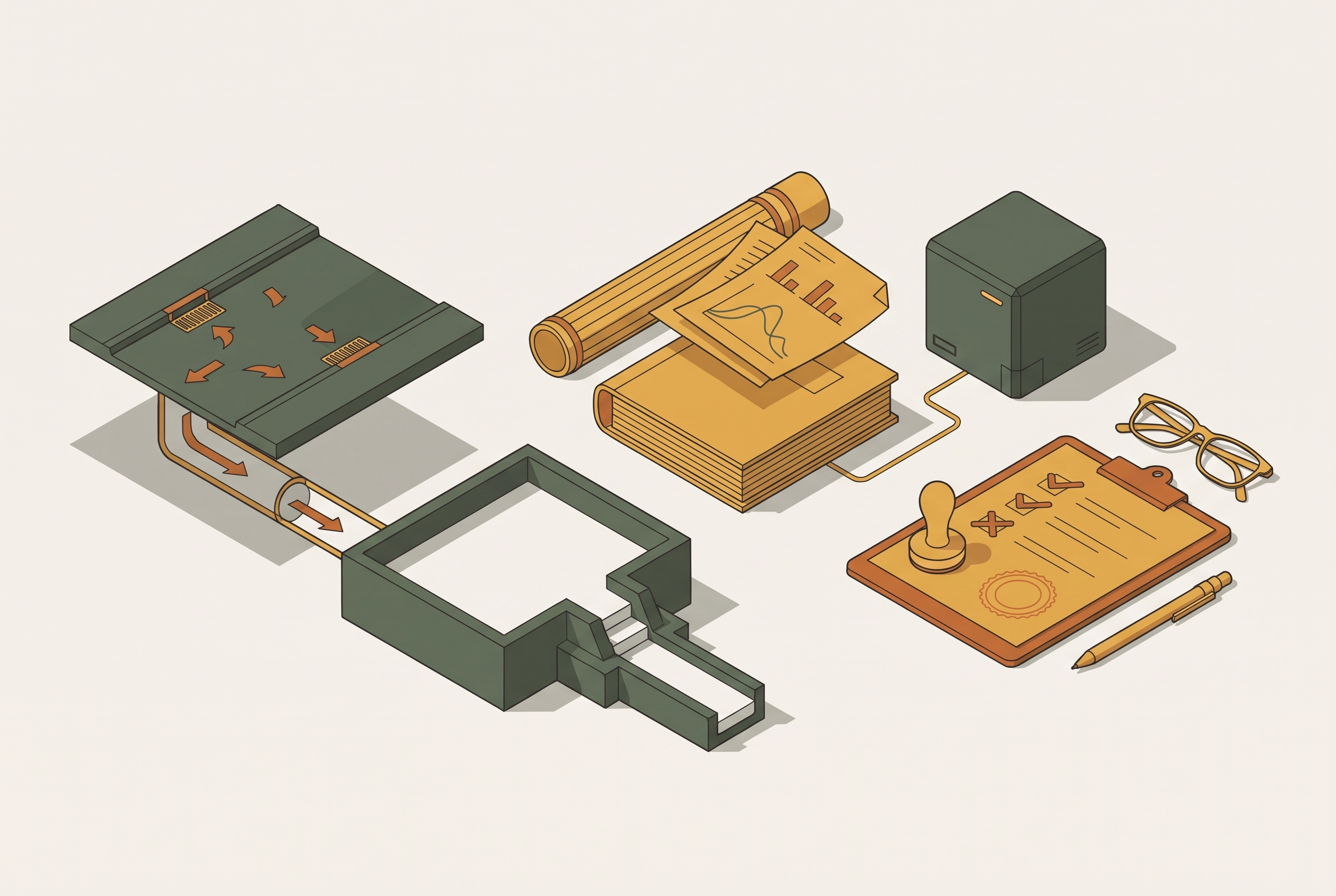
AI performance on stormwater permit calculation packages is task-specific. It can accelerate SWPPP drafting, runoff calculations, BMP sizing, and document assembly, but those gains depend on prepared project data, connected workflows, and licensed engineer review. For civil engineering firms, the useful measure is whether the same team can deliver more permit-ready packages without weakening technical review or professional accountability.
What stormwater permit calculation packages actually contain and why they are labor-intensive
A stormwater permit calculation package is a structured bundle of deliverables, each with its own production requirements. The SWPPP covers site characterization, BMP selection and design, inspection schedules, recordkeeping, operator certification, and required 40 CFR 122.22 certification language. It remains a living record throughout construction. Runoff and hydraulic calculations establish peak flows, conveyance sizing, and detention or underground storage requirements using methods and tools such as TR-55, the Rational Method, SWMM, or HEC-HMS.
BMP documentation translates those calculations and site requirements into erosion and sediment controls, good housekeeping practices, and stabilization schedules. Receiving-water analysis checks 303(d)/TMDL status, while other regulatory determinations cover endangered species, historic properties, and the MS4 requirements that apply. Plan sets and appendices add site maps, BMP details, permit authorization, inspection forms, and subcontractor certifications. These components must agree with one another. Their preparation requires assembling site-specific inputs against layered federal, state, and local requirements, including project-level checks of design standards, inspection frequencies, stabilization deadlines, and reporting thresholds.
EPA's proposed 2026 Multi-Sector General Permit would replace the 2021 MSGP, which expired February 28, 2026, and proposes new requirements that include indicator monitoring for PFAS. That industrial stormwater proposal is distinct from construction permitting. For firms handling affected industrial projects, it would expand the information that packages must assemble and address.
Where AI performs reliably on stormwater packages today
SWPPP drafting is a strong fit for structured automation. AI-based tools can populate site characterization, BMP sections, inspection schedules, recordkeeping requirements, and operator certification within a prescribed document structure. They can include required certification language and organize BMP design specifications. The output is a draft for review. A licensed professional still confirms site accuracy, applicable state requirements, and receiving-water triggers rather than treating complete sections as proof of compliance.
Runoff calculation and BMP sizing tools address a different production burden. Stormwater design AI can calculate runoff volumes, size detention facilities for peak flow reduction, and design bioswale and rain garden features to meet local requirements. Some tools optimize designs to meet ordinance requirements at minimum cost. Engineers check the inputs, the method, and the design that comes from them. A calculated storage volume is useful only when the underlying site conditions and regulatory criteria are appropriate.
Once trained, a surrogate AI model can run scenarios in seconds or minutes, screen layouts, and flag risky outlets, low points, or overloaded pipes. Engineers then validate selected designs in SWMM or HEC-HMS. Regulatory parsing supports an earlier decision point. Natural-language processing can find the municipal clauses that matter, while a code compliance platform can review them and give answers that cite sources. These outputs help the project team find requirements, but the team must check whether the cited provisions apply to the design.
Why stormwater work is structurally suited to AI assistance — and where the boundary sits
The common feature across these tasks is structure. Calculation methods have set inputs and outputs that can be checked, and permit documents follow the same structure from one package to the next. The Construction General Permit primarily establishes SWPPP structure, with 40 CFR Part 122 providing the underlying regulatory authority. Much of the narrative is rule-anchored language populated with project data. AI therefore assists with repeatable production rather than having to originate an engineering argument for every section.
Repetition also explains the value of surrogate modeling. A drainage revision triggered by one reviewer comment may require a dozen scenarios to be rerun. Faster screening gives engineers time to weigh more options before they settle on a final design. That division of work is deliberate. The model handles repetitive exploration, while the engineer judges the site, selects an appropriate approach, and confirms the design in the required analysis software.
Professional judgment belongs inside that workflow. Matching familiar language alone cannot settle how to tailor a package to state rules, how to interpret a discharge pathway, or how to make species or historic-property determinations. The work must still meet the certification and PE seal requirements that apply, including state requirements for a seal on the SWPPP itself. The price floor for a stamped report reflects liability as well as production time, so reduced drafting hours do not remove the professional responsibility attached to submission.
How the broader AEC tool ecosystem feeds into stormwater permit production
Stormwater documentation draws on survey and design work. AirWorks converts LiDAR scans, drone imagery, orthomosaics, satellite imagery, and field data into CAD and GIS deliverables, shortening the path from site collection to design inputs. Aurivus processes point clouds into BIM elements. That capability is relevant to retrofit and redevelopment projects where existing conditions must be modeled before drainage design begins. Both steps affect when the drainage team gets project information it can use, though more work is needed to complete a permit package.
Civil 3D 2026.2 also includes more than 75 new Dynamo nodes supporting automation of stormwater control workflows. Embedded assistance and workflow automation reduce the separation between new capabilities and the grading, pipe-network, and plan-production environment engineers already use.
Other tools address repeatable analysis and documentation work. VIKTOR supports reusable engineering applications for tasks such as calculations and code checks, while AECWorks.AI automates document compliance activities including specification checking, drawing comparison, and field reporting. SWAPP creates sets of construction drawings from design models. Their relevance depends on the handoff to permit production. Faster survey processing, analysis, and document assembly can combine into a larger reduction in production time, but disconnected outputs still leave the team responsible for reconciling each step.
BMP documentation translates those calculations and site requirements into erosion and sediment controls, good housekeeping practices, and stabilization schedules.
What workflow integration actually requires from a civil engineering team
Integration starts with ownership of the project inputs. Site data, soil types, drainage patterns, receiving-water classifications, and existing permits must be prepared before an AI tool can produce a useful draft. Someone must own that preparation and its quality. Without it, document generation delivers a template that engineers must turn into a project draft they can review.
The next requirement is a usable review path. Engineers need a way to check outputs against the permit and local ordinance that apply, receiving-water requirements, and site conditions without rebuilding the package from scratch. Software fit is part of that requirement. Good implementation fits AI into those tools and connects its output to the firm's deliverables.
Past projects, standard BMP details, project types, and local regulatory context provide the basis for output that needs less editing than a generic draft. Onboarding is a required part of the production work. An AI partner working on-site with engineers can support that preparation and fit the system to the existing process. Small and mid-size firms especially need this help because staff still have to prepare inputs, review outputs, and fit them into deliverables even when each task takes less time.
What ROI from AI on stormwater work actually looks like — and how to measure it correctly
AI can reduce time spent establishing document structure, populating BMP sections, rerunning scenarios, and formatting packages. Engineering judgment remains necessary alongside those production savings. Faster scenario testing can also reduce late redesign, while stronger packages can reduce agency back-and-forth and improve approval schedule predictability. The value extends beyond the first draft.
Task-level savings alone do not establish a return. Billable-hour accounting can hide how much work gets done within measures of utilization, and faster drafting may just move work into preparing inputs or senior review. A firm needs a baseline to distinguish those outcomes. Without one, reduced drafting time can look like progress even when total package production has not improved. The relevant comparison is the workflow before and after deployment, including the work needed to make the tool usable.
For principals, the measurement approach should therefore include revenue per person, packages delivered per month, and resubmission rate. Package production time provides a further baseline for evaluating the full process. Training and onboarding belong in that evaluation too. A capable tool and a team able to use it consistently are separate requirements, and purchasing the former does not establish the latter. Returns become meaningful when faster production translates into greater throughput without additional rework or an expanding review burden.
What licensed engineer oversight looks like when AI produces the first draft
For the reviewing engineer, oversight should follow the division of work rather than treat the draft as a finished product awaiting approval. A structured checklist should address known failure modes and the governing requirements for the project. State tailoring is the first practical distinction from a federal baseline. Confirm BMP standards, inspection frequencies, stabilization deadlines, and reporting thresholds against the applicable permit. A well-organized SWPPP does not establish that those selections are correct.
Receiving-water and eligibility determinations need to be checked on their own. AI may find listed waters, but the engineer must check whether the project's discharge pathway reaches them and whether enhanced BMPs or monitoring apply. Proximity alone is also insufficient for endangered species and historic-properties eligibility. Making those determinations may take work with agencies or consultation as well as a generated document. Review must also distinguish operator certification from PE seal requirements and confirm that the assembled document satisfies the applicable obligations.
Hydraulic review begins with the inputs and method. Confirm that soil information from NRCS Web Soil Survey, land cover, and drainage-area delineation match the site conditions and grading plan. Then assess whether TR-55, the Rational Method, or SWMM is appropriate for the project scale and agency requirements. Detention sizing must satisfy the local stormwater ordinance. This review structure directs attention to the decisions that require engineering judgment rather than relying on an undirected reread of every paragraph.
How civil engineering firms should approach adding AI to their stormwater permit workflow
Firm owners should choose a specific production step to start with. For many construction stormwater practices, SWPPP drafting and BMP section population offer the strongest starting point because they are frequent, templated tasks. Build that assistance into the existing workflow. Civil 3D can remain the drainage design environment, HEC-HMS or SWMM the hydrology environment, and Bluebeam the plan-review environment. The objective is a better-connected production chain.
Before live deployment, calibrate the tool to past projects, firm standards, local requirements, and standard BMP details. At the same time, set out the order of the licensed engineer's review and the standards it must follow. Review should have a known place and time cost. Establish baselines for package production time, resubmission rate, and revenue per person so that gains can be assessed against the full workflow. On-site enablement by an AI partner fits this approach when it helps engineers prepare data, use existing tools, and apply the review protocol.
The build-versus-buy decision also requires a maintenance perspective. Custom AI can cost more to maintain than small and mid-size firms expect, and models can improve so fast that systems built in-house soon grow old. Purpose-built tools maintained by dedicated teams are a more durable fit for firms without software development capacity. Tool count is not the adoption objective. For owners, the competitive opportunity is additional permit capacity from the same team, with production assistance absorbed into the firm's methods and licensed engineers retaining responsibility for the work submitted.
Sources
- Stormwater Discharges from Industrial Activities-EPA's Proposed 2026 MSGP
Supported the description of the proposed 2026 Multi-Sector General Permit replacing the expired 2021 MSGP and adding PFAS indicator monitoring.
- proposed 2026 msgp fact sheet
Provided detail on the proposed MSGP's new requirements, including PFAS indicator monitoring, and how they would expand the information industrial packages must address.